

Behold the latest marvel of American problem-solving: when the bridge is too low for the boats, don’t raise the bridge — lower the river. And if the nation’s aviation system is short of paid controllers because the government is shut like a 2 a.m. bar, well then, lower the sky.
The Trump administration’s FAA will cut flight capacity at forty major airports because paychecks for key people have been politely placed in witness protection. Welcome to First World Dysfunction, now boarding all zones.

Administrator Bryan Bedford and Transportation Secretary Sean Duffy stepped to the mic like ushers at a turbulence convention and announced a “temporary” squeeze: 4 percent fewer flights on Friday, marching to 10 percent, from 6 a.m. to 10 p.m., where the pressure is “hottest.” Translation: if your plane usually leaves at breakfast, it now leaves at brunch, maybe lunch, perhaps never.
International flights are exempt, presumably because nothing says America First like ensuring the wide-bodies from abroad stay punctual for television—for the optics, of course.
This is not because people are flying less.

It’s because we decided federal employees who separate aluminum tubes at five-mile intervals don’t need to be paid on time.
For safety, you understand.
We’re keeping the airspace safe by scheduling fewer airplanes to collide with the budget.
Forty airports made the list: Atlanta, Boston, O’Hare, the whole New York triptych—because if you’re going to reduce capacity, you might as well do it where people live.
United Airlines, not to be out-ironed by government irony, now offers refunds even on basic economy, a class of service previously designed to teach humility. “Long-haul international and hub-to-hub won’t be impacted,” they say, the way a diner reassures you the kitchen fire is contained to the fryer.

The FAA calls it unprecedented. Bedford says he’s never seen anything like it in thirty-five years, which is bureaucrat for “the punchline writes itself.” We could, of course, pay the professionals who keep aluminum from kissing aluminum.
But that would require reopening the government instead of treating the national airspace like a dimmer switch.
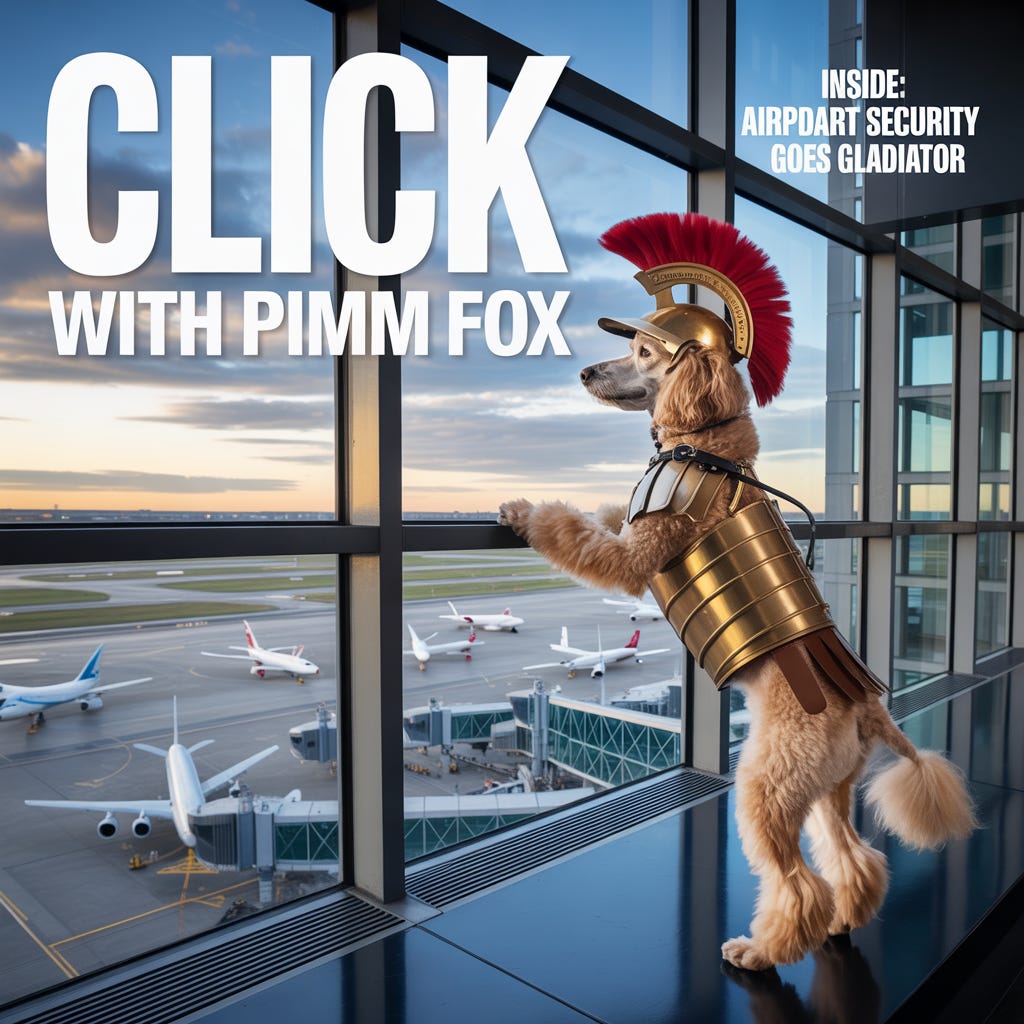
Picture the planning meeting. “We don’t have enough staffed towers.” “Should we fund them?” “Don’t be ridiculous, Ted. Let’s invent Air Hunger Games. Same demand, less supply, much learning.” Somewhere an economist is drawing a neat little supply curve while a family of four drapes across Gate 23 like decorative scarves.
We used to measure First World status by the reliable arrival of trains and planes. Now we measure it by the reliability of the press conference assuring us that the unreliability is very safe. We shave capacity not because weather is bad but because politics is.

We’re flying IFR—Ideology Flight Rules—clearing through a thick layer of grandstanding with occasional outbreaks of math.
Meanwhile, the public is invited to marvel at the generosity of airlines for waiving change fees they invented, while the FAA pats itself for heroically avoiding disaster by canceling its own ability to create one. It’s performance art with jet fuel.

Raise the bridge, pay the people, turn the lights back on. Until then, expect delays. Your government shutdown is currently number fifteen for departure, holding short of common sense, awaiting an opening that never comes.
And yes, the seatbelt sign is on because somewhere, someone decided turbulence is cheaper than competence, in plain view.