

Imagine waking up to a chyron that looks like a billionaire’s blocked-contacts list, now expanded for Middle Eastern time zones: Putin gone. Xi gone. Kim Jong Un gone.
Cuba’s leadership gone.
Iran’s clerical hierarchy gone.
The anchors pause.
The maps blink.
Somewhere, a producer asks whether there’s a lower-third template for “Global Who’s-in-Charge Now?”
This is the world where the United States, by some alchemy of executive will, military action, sanctions, strongly worded statements, and reality-TV confidence, has removed every foreign leader Donald Trump doesn’t like.
Not replaced — just removed.
Like old apps. Swipe.
Delete.
“Are you sure?”
Very.
The first thing that happens is quiet.
Not peace — quiet.
The kind you get when a loud bar finally closes and everyone realizes the furniture is still broken.
Russia wakes up without Vladimir Putin and spends the morning rummaging through drawers labeled Authority.
Oligarchs sprint.
Generals form committees, then subcommittees, then leak that the committees are doing great.
Somewhere, a man named Sergei becomes interim everything because he stood closest to the microphone and didn’t blink.

China, suddenly post–Xi Jinping, does not collapse into democracy with fireworks.
Instead, it produces eight new coordinating bodies, fifteen “temporary” councils, and a white paper explaining why nothing has changed except the font and the mood lighting.
Western commentators declare a dawn.
Factories keep humming.
Trains run on time.
The algorithm continues to know you better than your mother.

North Korea without Kim Jong Un is performance art.
The statues remain.
The music swells.
The announcers keep announcing.
But the smiles wobble.
Portraits feel… less decisive.
A mid-level official Googles “What happens if nobody is the Supreme Leader?” and clears his browser history.
Cuba exhales, then argues.
Loudly.
For years.
About baseball, markets, dignity, who ruined the coffee, and whether Miami should be blamed retroactively.
Florida talk radio achieves escape velocity.

Then there’s Iran — suddenly without its clerical apex.
The turbans don’t vanish; they redistribute.
Power, long concentrated, fractures into factions that speak the same theology with different punctuation.
Streets fill with celebration and suspicion.
There’s dancing, then debating, then debating about the dancing.
The Revolutionary Guards hold meetings about meetings.
Everyone agrees on one thing: history has arrived early, and nobody read the syllabus.
Washington holds a press conference to insist this was never about regime change, except where it obviously was, but only because these leaders were “very unfair.”
Diplomats say “stability.”
Cable panels say “chaos.”
Social media says it predicted all of this in 2016, 2018, and last Tuesday.
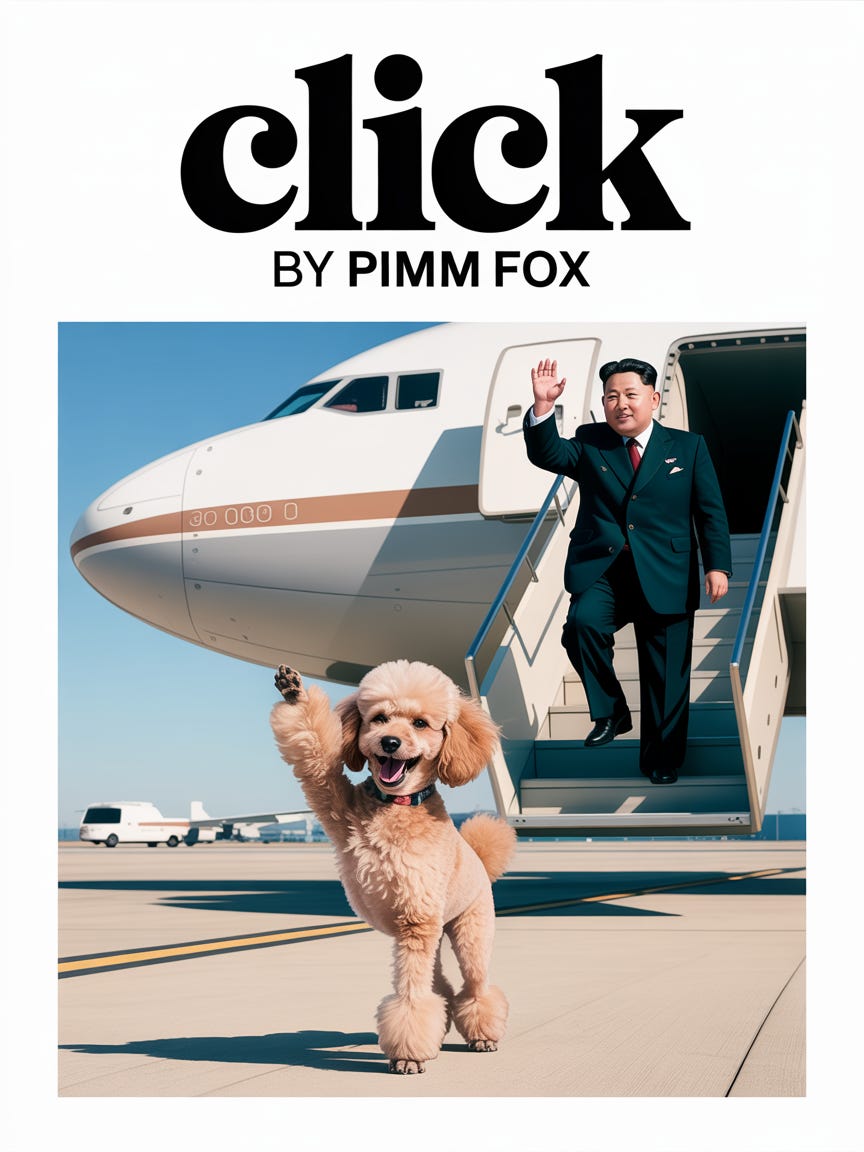
Here’s the twist nobody likes: the world does not become a liberal utopia.
It becomes messier, louder, and more honest.
Without Big Bad Villains to organize the narrative, countries must deal with themselves.
Corruption doesn’t evaporate; it loses its mascot.
Nationalism doesn’t die; it auditions new spokespeople.
Old grievances don’t disappear; they file paperwork.
America, having finally fired everyone it dislikes, looks around and notices the unsettling truth: problems remain.
History refuses to end on a commercial break.
And Trump — having won the ultimate reality show — discovers the final irony.
Once you’ve deleted all the villains, the camera turns inward.
The ratings dip.
The audience wants a sequel.
The world, stubbornly, keeps running without a single showrunner.
Because removing leaders is easy.
Replacing systems is hard.
And getting rid of people you don’t like has never been the same thing as fixing what made them powerful.